Early hands-on experience in clinical practice
University of South-Eastern Norway


Institution: University

Location: Horten, Norway

Institution size: 80 midwifery students
Background and challenges
In Norway, one must first qualify as a nurse and gain two years of nursing experience before starting a two-year midwifery program. The program combines theory and clinical practice, similar to many other countries. At the University of South-Eastern Norway (USN), the goal is to prepare students as thoroughly as possible before they enter clinical practice, helping them maximize their hands-on experience and graduate as confident midwives. One challenge has been teaching clinical midwifery skills within a limited timeframe before students begin their clinical rotations. To address this, USN has implemented GynZone as a systematic part of student preparation just before clinical placement.
Implementation
USN has purchased suturing kits for the classes to be used at the university in combination with their GynZone license. Additionally, USN recommends that students purchase their own suture starter kits to complement GynZone’s e-learning content. These kits are used during four hands-on workshops at the university, where students use GynZone e-learning content in preparation for the workshops. The workshops are scheduled for the final week before students begin their clinical rotations, after which they have completed their exams and assignments and can fully focus on both the e-learning and the workshops. Furthermore, the training remains fresh in their memory when they enter the delivery rooms.
During the workshops, the educators focus on diagnostics, anesthesia and pain management before diagnosing and suturing, basic surgical skills, and suturing first- and second-degree tears.
USN and GynZone have today been working together on simulation training and e-learning since 2015.
The impact
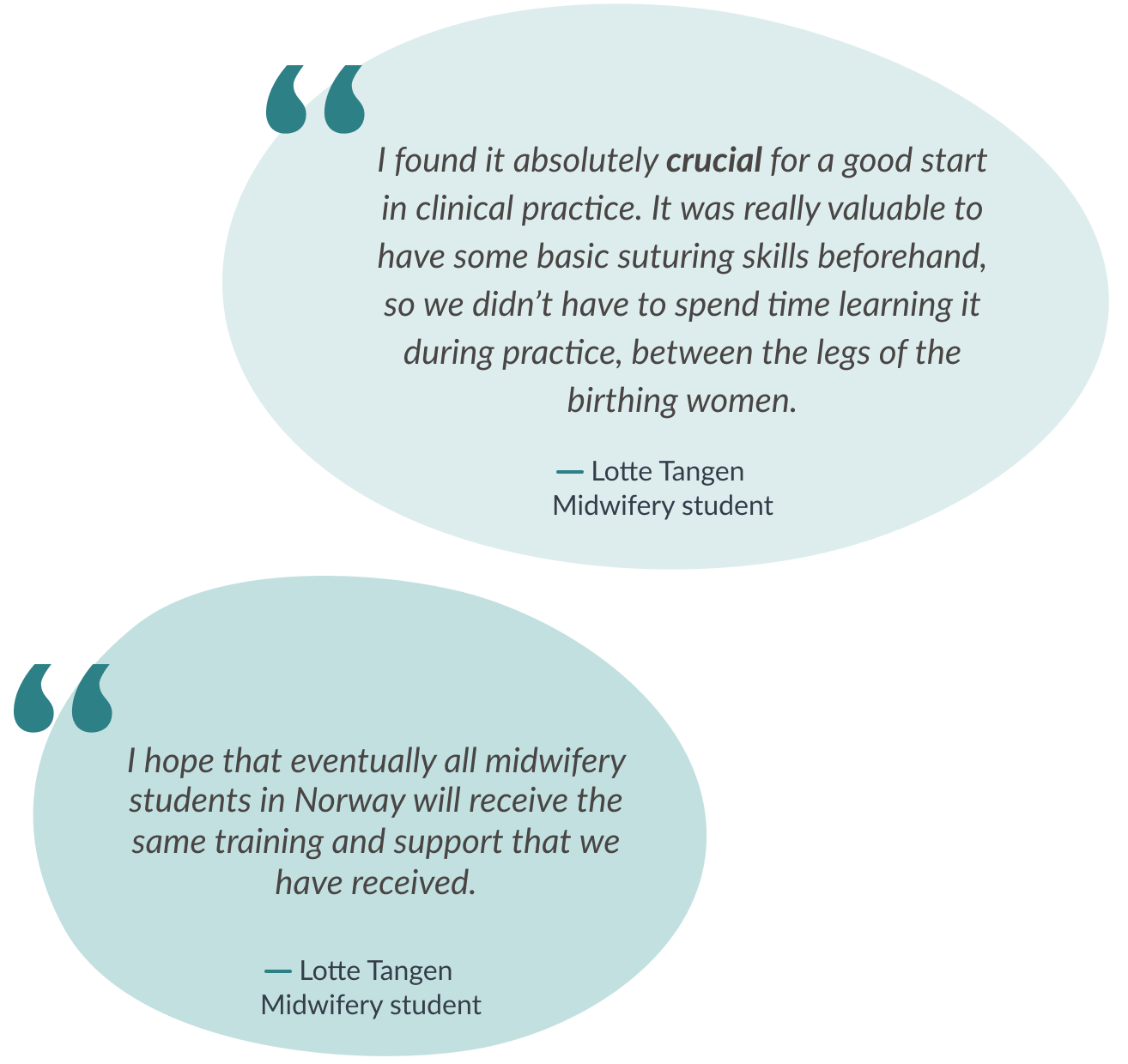
- All students sutures at least a first- or second-degree tear within the first two weeks of clinical practice—some also repaires episiotomies
- Early mastery of knot-tying and suturing skills boosts confidence in the clinic
- Improved focus on pain management and greater confidence in advocating for better anesthesia during suturing
Conclusion
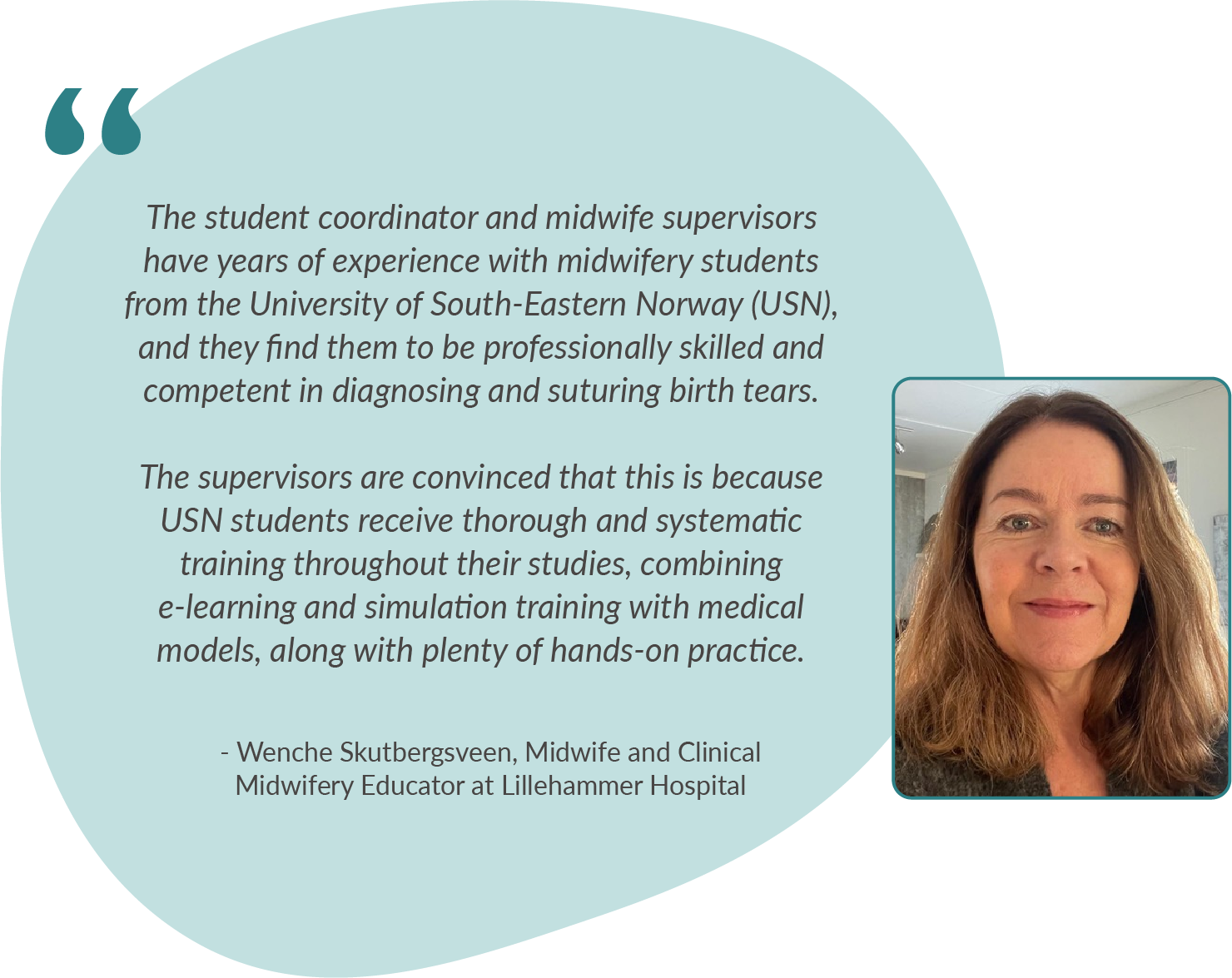
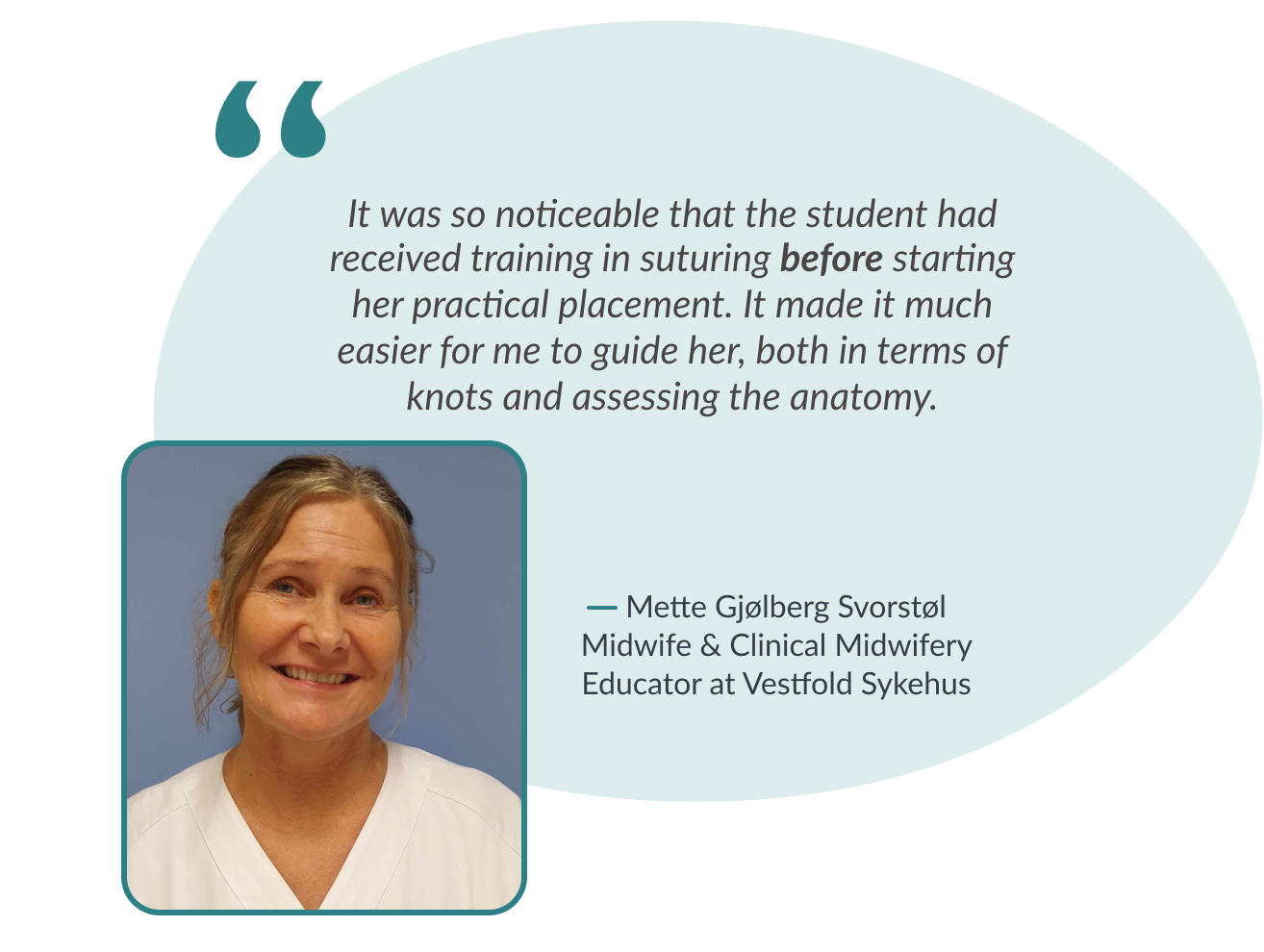
The University of South-Eastern Norway and its educators have received evaluations from hospitals and their clinical supervisors reporting that the students’ competencies in diagnostics and suturing are very strong. Clinical supervisors have shared that they feel confident allowing students to take an active role early on. They have been reassured by the students’ knot-tying skills, thanks to the GynZone e-learning content and the workshops held at the university.
Through early hands-on experience in clinical practice, the students become confident and competent in perineal repair, which not only enhances their ability to focus on other clinical midwifery competencies but also boosts their confidence as graduate midwives.
Other GynZone stories
GynZone supports the Ukrainian Association of Midwives
GynZone supports the Ukrainian Association of Midwives with free training and licenses, helping midwife supervisors build lasting clinical expertise.
Institution: NGO
Location: Ukraine 
Global reach: 1,000 midwives and healthcare professionals

Queensland Health partners with GynZone for midwifery care
Queensland Health partners with GynZone to deliver state-of-the-art clinical training to 1,000 midwives across Queensland in a new strategic rollout.
Institution: Government/ Public Health
Location: Australia 
Global reach: 1,000 midwives and healthcare professionals

Maternity foundation
Every year, millions of women in fragile and low-resource settings experience birth injuries, often worsened by insufficient access to skilled repairs. he consequences can be lifelong: pain, infections, incontinence, and social stigma.
Institution: NGO
Location: Copenhagen, Denmark 
Global reach: 500,000 midwives and healthcare professionals

Oxford Brookes University
Oxford Brookes University offers both a BSc and MSc 3-year direct entry midwifery degree, and a 2 year BSc in Midwifery for qualified nurses. The educators take great pride in working with the Nursing and Midwifery Council to integrate the curriculum closely with clinical placement to ensure maximal relevance.
Institution: University
Location: Oxford, UK 
Institution size: 150 midwifery students

Thomas Jefferson University
Thomas Jefferson University uses GynZone to deliver consistent, high-quality training for remote midwifery students. Furthermore, educators report benefiting from structured, up-to-date resources, ensuring effective teaching both remotely and on-campus.
Institution: University
Location: Philadelphia, USA 
Institution size: 80 midwifery students

Vaasa Central Hospital
Vaasa Central Hospital enhanced diagnostic skills and fostered a strong learning culture by implementing GynZone. Midwives, doctors, and students learn together, sparking motivation, joy, and curiosity while still improving suturing techniques.
Institution: Hospital
Location: Ostrobothnia, Finland 
Institution size: 1200 births annually

Epping Hospital
Epping Hospital used GynZone to enhance midwives’ skills in perineal repairs, boosting confidence, competence, and clinical outcomes. GynZone empowers staff with the knowledge and skills for better patient care.
Institution: Hospital
Location: Epping Victoria, Australia
Institution size: 4000 births annually

University of Technology Sydney
Midwifery students at UTS felt unprepared for birth lacerations. With GynZone, they gained confidence, improved skills, and reduced anxiety — leading to more competent students.
Institution: University
Location: Sydney, Australia 
Institution size: 320 midwifery students