

1. Systematic examination
- Create optimal conditions for clinical assessment by positioning the woman comfortably and ensuring good lighting.
- Perform a structured examination, starting with an overall assessment of the tear’s appearance, followed by inspection of the labia and vaginal wall, evaluation of the perineal body, and a rectal examination to assess sphincter involvement.
- Second‑degree tears may coexist with labial tears or perimysium defects around the external anal sphincter, which can easily be missed without a stepwise exam.
Watch free videos and learn about medical terminology in connection with obstetric lacerations with a free GynZone membership.
2. Always assess the rectovaginal fascia
- Careful visual inspection and palpation should evaluate not only the vaginal mucosa but also the underlying rectovaginal fascia [1].
- Tears involving the rectovaginal fascia and deeper paravaginal structures, despite being “only” second‑degree, have been associated with increased risk of pelvic floor dysfunction and rectocele [2].
3. Accurate diagnosis is the foundation of safe care
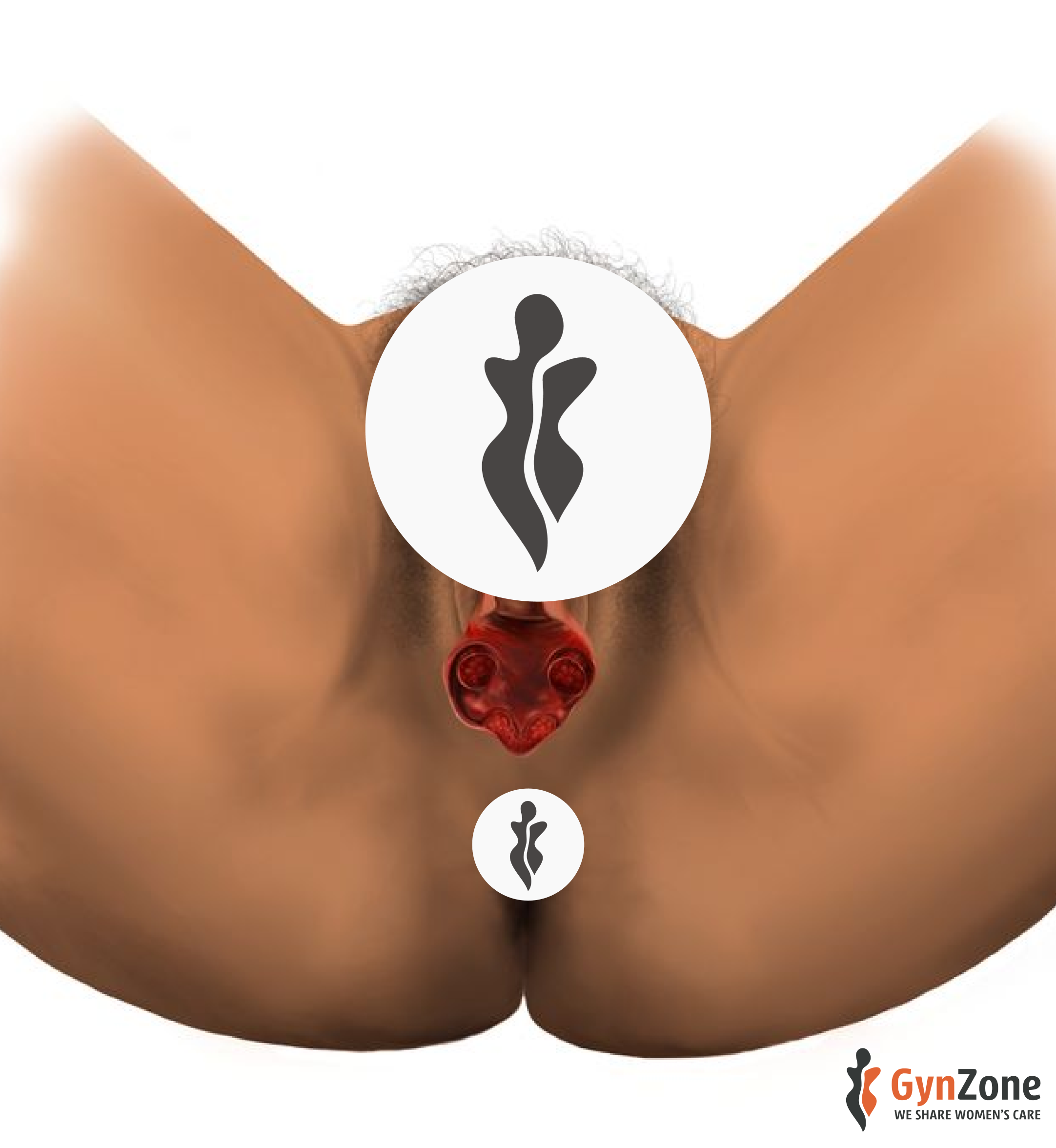
- According to ICD-11: JB09.1 a perineal tear is classified as second-degree when the fascia and muscles of the perineal body are involved, but the anal sphincter remains intact. This includes the bulbospongiosus muscle, the transverse perineal muscle, and the rectovaginal fascia [3].
- A second-degree tear therefore ranges from tears with partial involvement of one of the superficial perineal muscles to involving both the superficial muscles and the rectovaginal fascia.
Watch a free video on classification of a second-degree tear on GynZone with a free membership.
4. The detailed subclassification
- Newer systems further subdivide second-degree tears into small, intermediate, and large categories based on involvement of the perineal body, tear length, depth, and anovaginal distance. However, this approach has not yet been adopted as an international standard [1,2].
- For example, small tears (O70.1a) affect <50% of the perineal body, while larger types (O70.1c–d) include deeper vaginal tears and rectovaginal fascia involvement, which correlate with higher complication rates [1,2].
5. Use consistent terminology and coding
- Using consistent terminology when describing and coding the tear in the woman’s journal supports communication among clinicians, as well as audit and research [1].
- The more precise terminology we use as clinicians, the better we know what to look for during clinical follow-ups, especially if there are complications to the tear, as the exact tissue involvement is documented [1,2].
6. Inform the woman and her partner
- The woman should feel safe and must give her consent to the planned examination, and any of the procedures that you perform during assessing the second-degree tear.
- It is also important to explain the treatment you are recommending for the repair and to gain consent for this as well.
7. Use adequate analgesia
- You have various options for reducing the woman’s experience of pain, and we recommend using analgesia already before your systematic examination. Often, the woman will be more relaxed, creating optimal conditions for gaining an overview of the tear.
- Local anesthetic can effectively eliminate the pain of stitches with a needle, but it is not always possible to eliminate the discomfort of being touched or the feeling when the suture is drawn through the tissue.
- Because pain is subjective, only the woman herself can determine whether she needs additional anesthesia. A useful approach is to ask her to rate her pain experience, for example using a VAS scale.
Learn about different types of analgesia—when to use them and how—in our Anesthetics course.
8. Repair technique in the anatomy layers
- Restore the anatomy layer‑by‑layer: labia first, then the rectovaginal fascia, vaginal mucosa, perineal muscles and then subcutaneous tissue, and finally the skin.
- Inadequate re‑approximation of the perineal body and rectovaginal fascia in a second‑degree tear can mimic the functional consequences of a more severe injury over time [1,2].
- A combination of continuous suture technique and interrupted stitches can be used, but most importantly use the technique you are most comfortable with.
Gain knowledge about continuous suture, interrupted stitches and other surgical skills with a GynZone pro membership.
9. Follow-up is part of good care
- Studies on second‑degree tears show that women with larger, more complex second‑degree lacerations report more complications at 8 weeks and 1 year compared with those with smaller tears [1,2].
- Documenting tear subtype and offering targeted postpartum review (for pain, incontinence, prolapse symptoms, and sexual function) can help identify women who may benefit from early pelvic floor rehab or specialist referral [1,2].
Explore clinical cases of underdiagnosis, improper adhesion, suture breakdown, asymmetry, infection and hematoma in our course Complicated healing with a GynZone pro membership.
10. Education and simulation matter
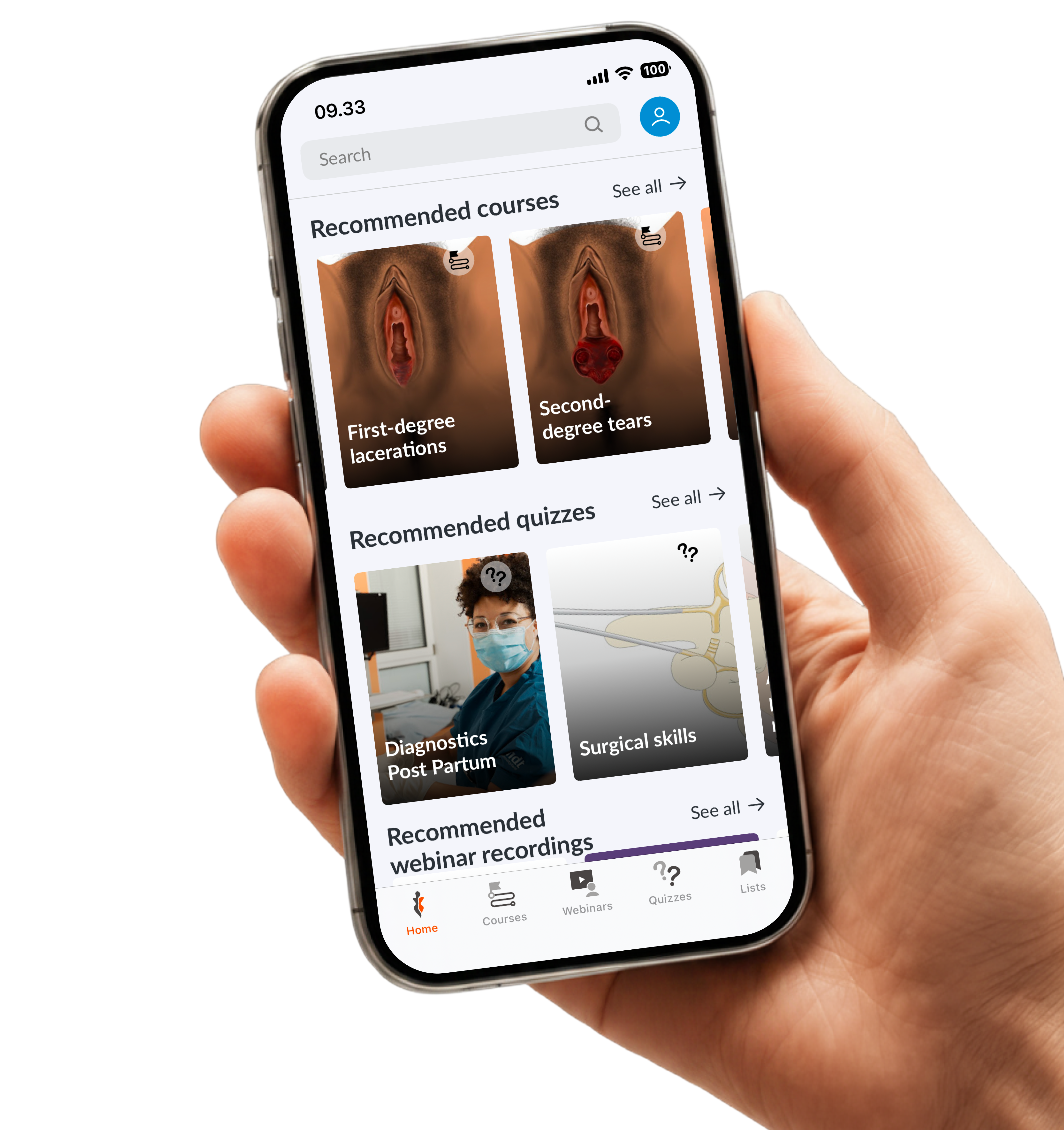
- GynZone provides structured online courses, webinars and quizzes on diagnostics and repair of all obstetrical lacerations from minor labia abrasions to 4th degree tears, aimed at both midwives, obstetricians and students.
- Watching animation videos, model demonstration videos and clinical cases with patients, whilst discussing with colleagues and peers helps clinicians become more confident and competent in their work.
Gain confidence in assessing and repairing second-degree tears

GynZone Pro
Get full access to GynZone, follow your progression, earn CE points and learn without limits.
GynZone free
Create a free account on GynZone and watch selected videos from our Diagnostics course for free.

GynZone is in use at 200+ hospitals and universities worldwide


References
1. Uustal E, Edqvist M. Subclassification of second-degree tears at delivery: creation and reported outcomes. BMC Pregnancy Childbirth. 2025 Mar 11;25(1):272. doi: 10.1186/s12884-025-07371-z. PMID: 40069680; PMCID: PMC11899676. [https://pmc.ncbi.nlm.nih.gov/articles/PMC11899676/]
2. Macedo MD, Ellström Engh M, Siafarikas F. Detailed classification of second-degree perineal tears in the delivery ward: an inter-rater agreement study. Acta Obstet Gynecol Scand. 2022 Aug;101(8):880-888. doi: 10.1111/aogs.14369. Epub 2022 May 11. PMID: 35546433; PMCID: PMC9564677. [https://pmc.ncbi.nlm.nih.gov/articles/PMC9564677/]
3. World Health Organization. (2026). ICD-11 for Mortality and Morbidity Statistics. ICD-11: JB09.1 – Second degree perineal laceration during delivery. Retrieved April 28, 2026, from https://icd.who.int/ct/icd11_mms/en/release