
Online course in episiotomy repair
An episiotomy is equivalent to a second-degree perineal tear: the bulbocavernosus and transverse perineal muscles are often both cut, and both need to be correctly identified and re-approximated for the woman to regain normal pelvic floor function. Get the repair right, and healing is often quick and the outcome is good.
In this course, you’ll follow the full repair from diagnosis to follow-up care.
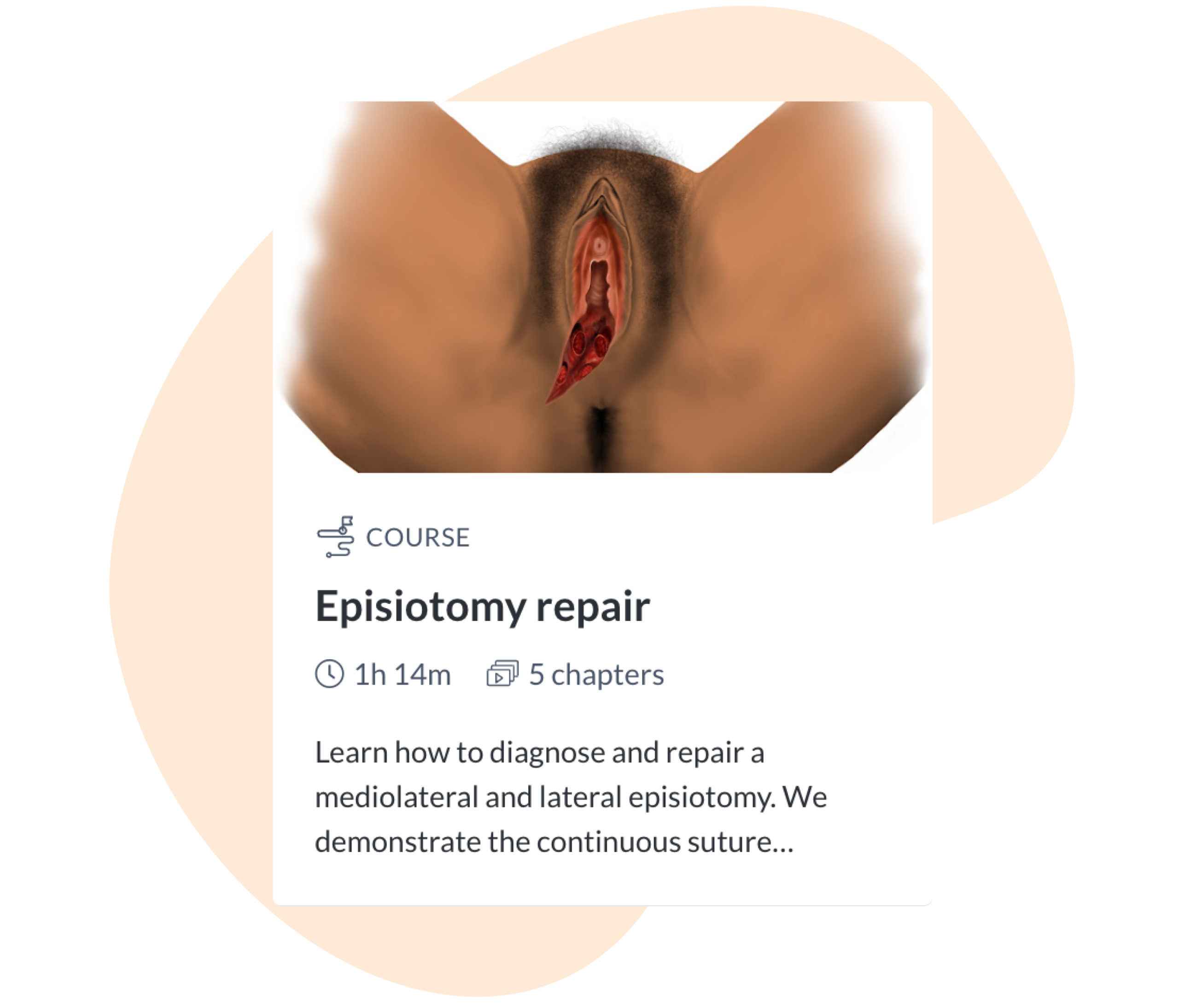
Features of the episiotomy repair online course
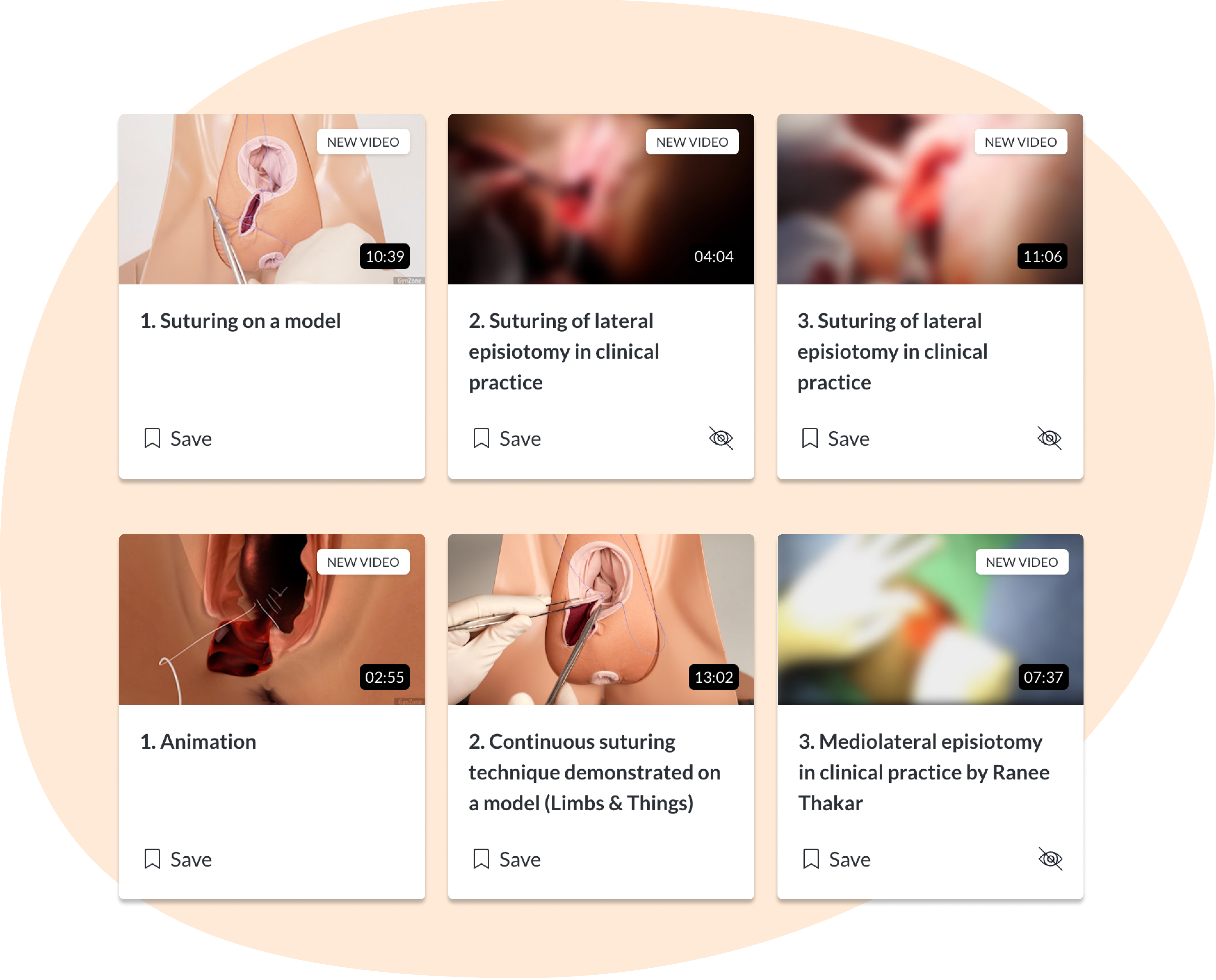
This course is designed for busy professionals and offer the following features:
- Video-based format: High-quality video lessons showcasing real-life procedures in clinical settings
- Self-paced learning to fit into your busy schedule
- Extensive clinical cases: Including the repair and follow-ups
- Photographic documentation: View clear, step-by-step visual guides for each clinical scenario, helping you bridge the gap between theory and practice
- Expert insights: Learn from experienced clinicians with years of expertise in postpartum care and episiotomies
What you will learn about episiotomy suturing and care
- Master episiotomy diagnosis
- Knowledge of the specific challenges associated with suturing an episiotomy.
- Master the step-by-step procedure for episiotomy repair, from diagnosis to follow-up care
- Learn tips and tricks that can be helpful during the repair.
- Learn strategies to ensure optimal outcomes for patients through timely evaluation and intervention
- Understand what the current evidence actually says about episiotomy and OASI, infection, blood loss, and long-term sexual function
You’ll find the articles that the course content is based on in the References section.
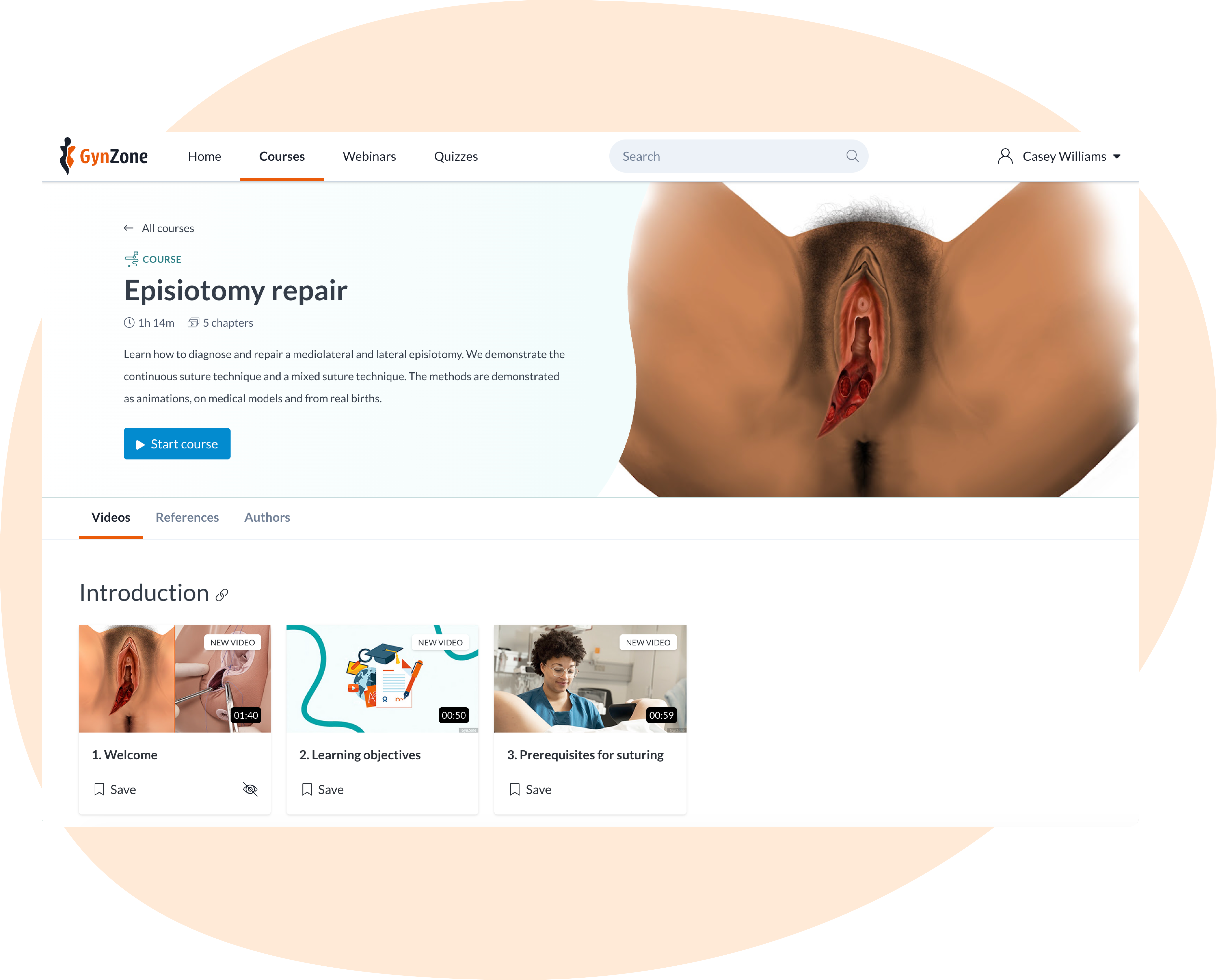
Clinical steps: How to repair an episiotomy step by step
Informed consent: Consent isn’t a formality; it changes outcomes
Anaesthesia first: Offer pain relief before you start suturing or diagnosing, even if the episiotomy was already anaesthetized for the cut
Diagnose: An episiotomy is often equivalent to a 2nd-degree perineal tear as these tears also involve the bulbocavernosus and transverse perineal muscles
Suture material: Use a self-soluble, synthetic multifilament suture – Vicryl, Vicryl Rapide, Dexon or similar – that holds its tensile strength for at least 14 days
The suture: Use continuous suturing, interrupted stitches, or a combination of both techniques. Follow your preferences and your local guidelines
Wound healing: The wounds will be healed after about two weeks in the case of second-degree perineal lacerations
These steps are described in greater detail and illustrated through both animated videos and clinical cases. Learn how to repair an episiotomy in our Episiotomy Repair course on the GynZone learning platform.
Practice your technique using our hands-on perineal repair training models.
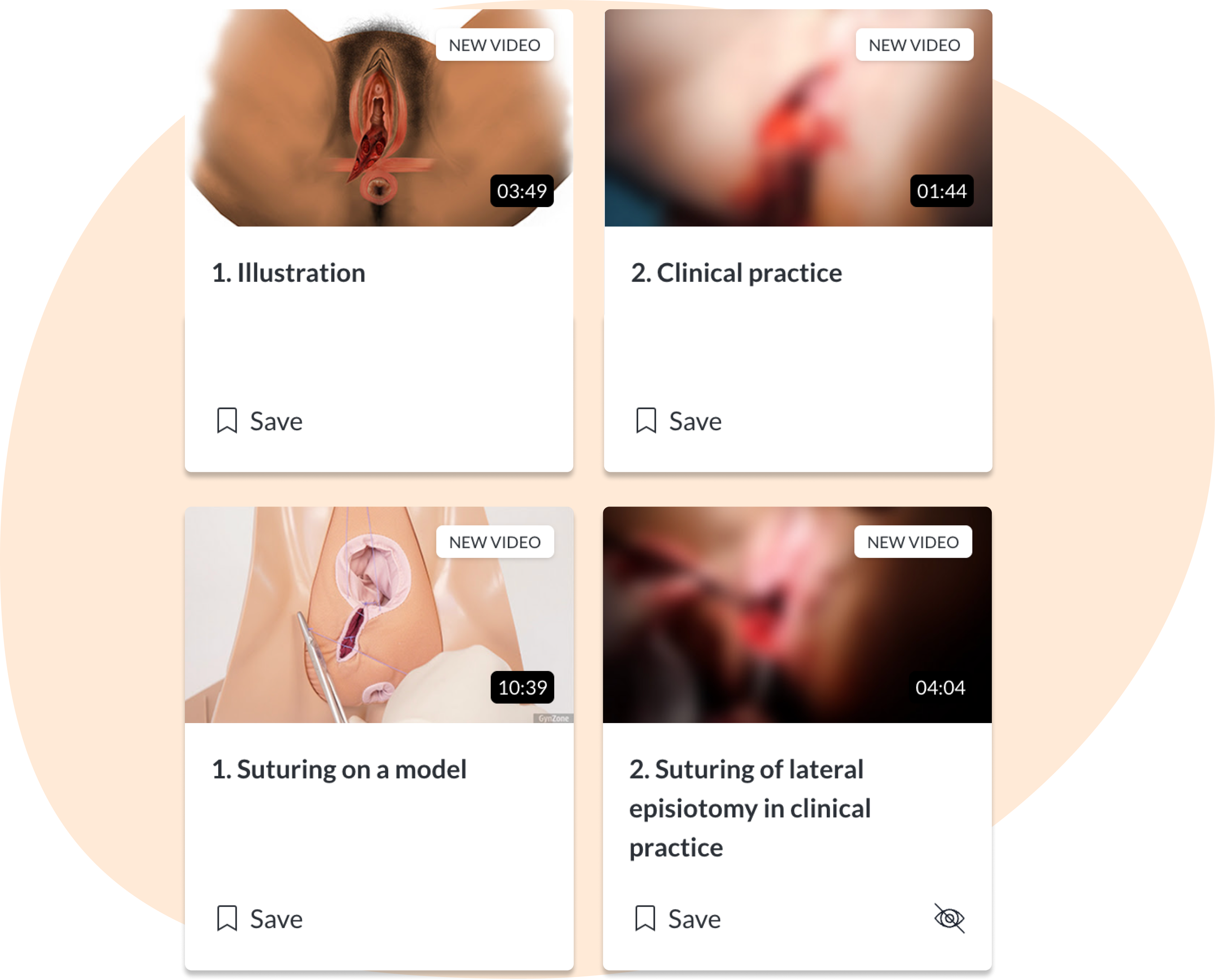
Who is this episiotomy training course for?
This course is ideal for:
- Midwives and obstetricians who perform and repair episiotomies, or supervise those who do
- Midwives and obstetricians training in operative or instrument-assisted birth, where the indication for episiotomy comes up most often
- Clinical educators and preceptors who need a clear, evidence-based reference to teach from
- Students and newly qualified midwives and doctors who want to understand the indications and the technique before they’re the one holding the scissors
Start learning with GynZone today
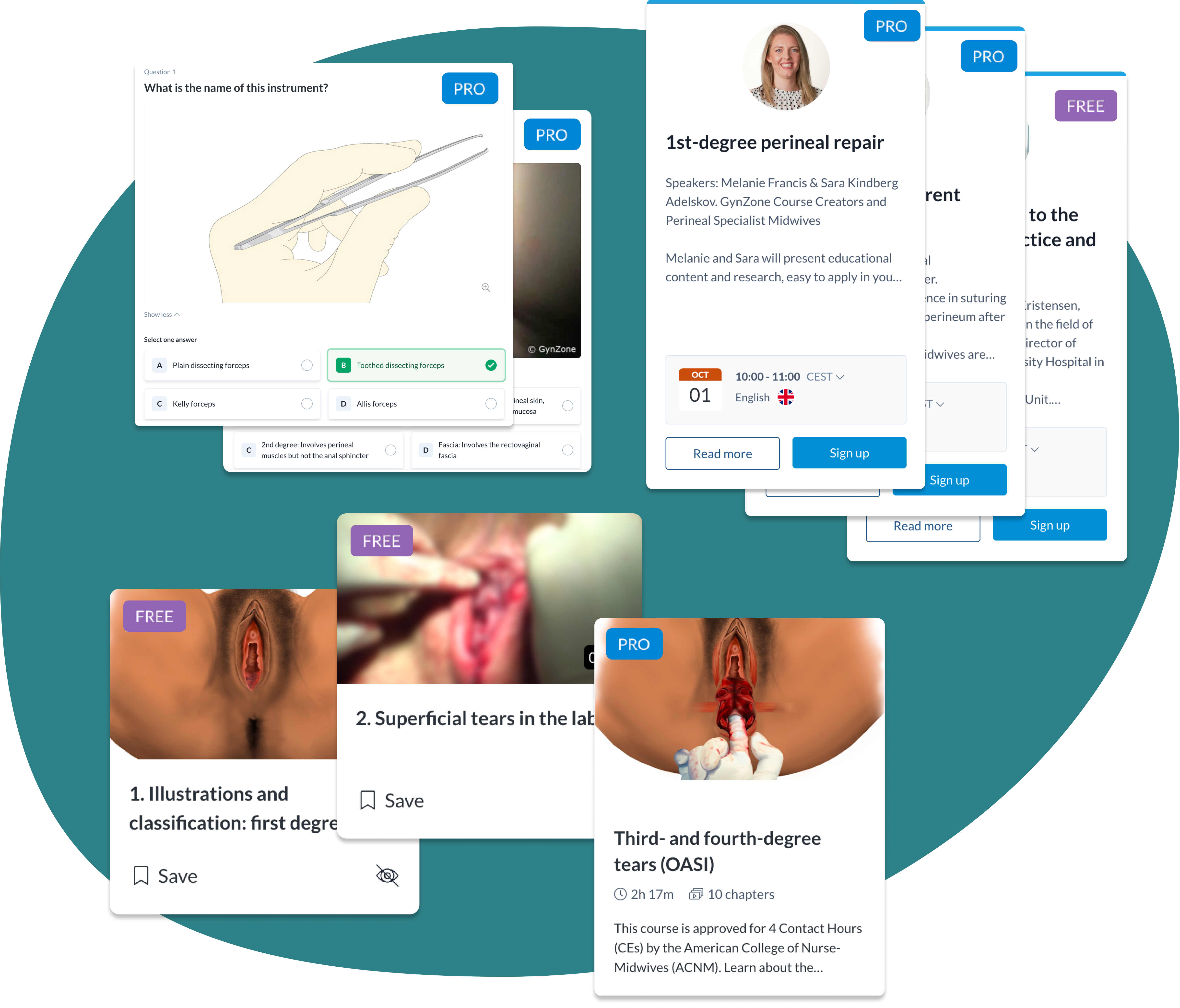
Create a free account and get instant access to 15 videos.
Ready for more? Upgrade to GynZone Pro for:
- 1200+ videos, including animations, model demonstrations, and real clinical footage
- 36 courses
- 13 quizzes
- Join live webinars with leading clinical experts, or catch up anytime in our webinar library
- A certificate for every course, quiz, and webinar — ready to log as CPD points
Authors of the course

Eva Dimon
Midwife, Clinical specialist Eva specialises in perineal repair and postnatal evaluation of healing.
Hanna Jangö
Consultant obstetrician, Phd
Hannas main research areas are within OASI and the mode of delivery in subsequent births.

Sara Kindberg
Midwife, PhD, Founder of GynZone
Clinical Perineal Care Specialist
Sara wrote her PhD Thesis on suturing of second-degree perineal trauma in 2008.

Ranee Thakar
MD, FRCOG
World-renowned consultant obstetrician and urogynaecologist
Professor Thakar’s clinical expertise lies in managing pelvic floor disorders across a woman’s life course, including incontinence, prolapse, and childbirth trauma.

Peggy Seehafer
Perineal Care Specialist, Midwife, Magister art. Anthropology
Peggy works as midwife since 1986 and has over 40 years of clinical experience and practices in both Germany and Norway.