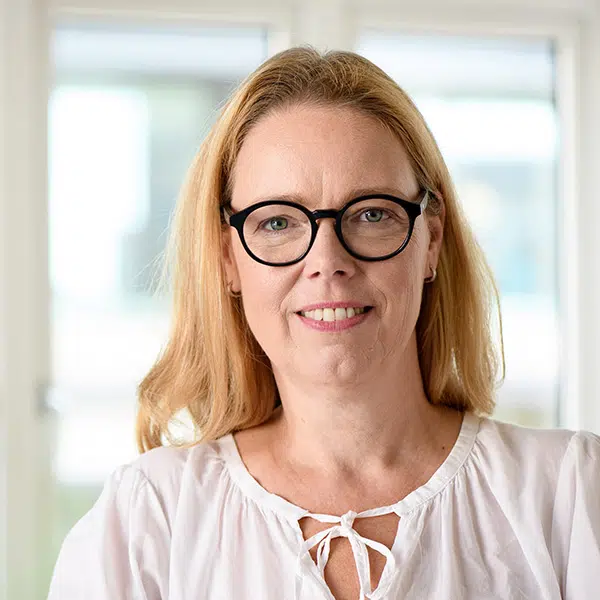
Peggy Seehafer

Perineal Care Specialist, Midwife, Magister art. Anthropology
Peggy is a GynZone workshop instructor within prevention and treatment of birth injuries. She works as midwife since 1986 and has over 40 years of clinical experience and practices in both Germany and Norway. Peggy is the author of numerous clinical articles and textbooks. She was also a member of the committee to revise the guidelines for operative vaginal birth (OVB) and for shoulder dystocia in German speaking countries (D-A-CH).

Achievements

  • Founder and CEO of AnthropologenKontor
  • Usable-Price for the design of a website for teenage pregnant women by the Körber-Foundation 2005/2006, transatlantic ideas competition
  • Nominated for the German Menopause Society Award 2000 for An empirical study of the influence of psycho-sociological factors during the menopause
Links to research Pubmed Staudeverlag
August 27th, 2025

The history of the episiotomy and current research

Speaker: Midwife and Physical Anthropologist Peggy Seehafer. Peggy has 40 years of experience in suturing and evaluating healing in the perineum after vaginal births. In Germany, home visits by midwives are offered up to 16 times after the birth.

Peggy Seehafer’s presentation includes:

  • The history of the episiotomy: why was the procedure invented?
  • WHO guidelines for good practice: max 10% episiotomies
  • Angle of the incision: 45 or 60 degrees?
  • Starting point for the incision: mediolateral or lateral?
  • Healing after an episiotomy: what does the woman feel?
  • Long-term impact and perspective on women’s health: follow-up 30 years after birth
  • Clinical case presentation by Midwife Jillian Clarke from Australia

JUNE 24th, 2025

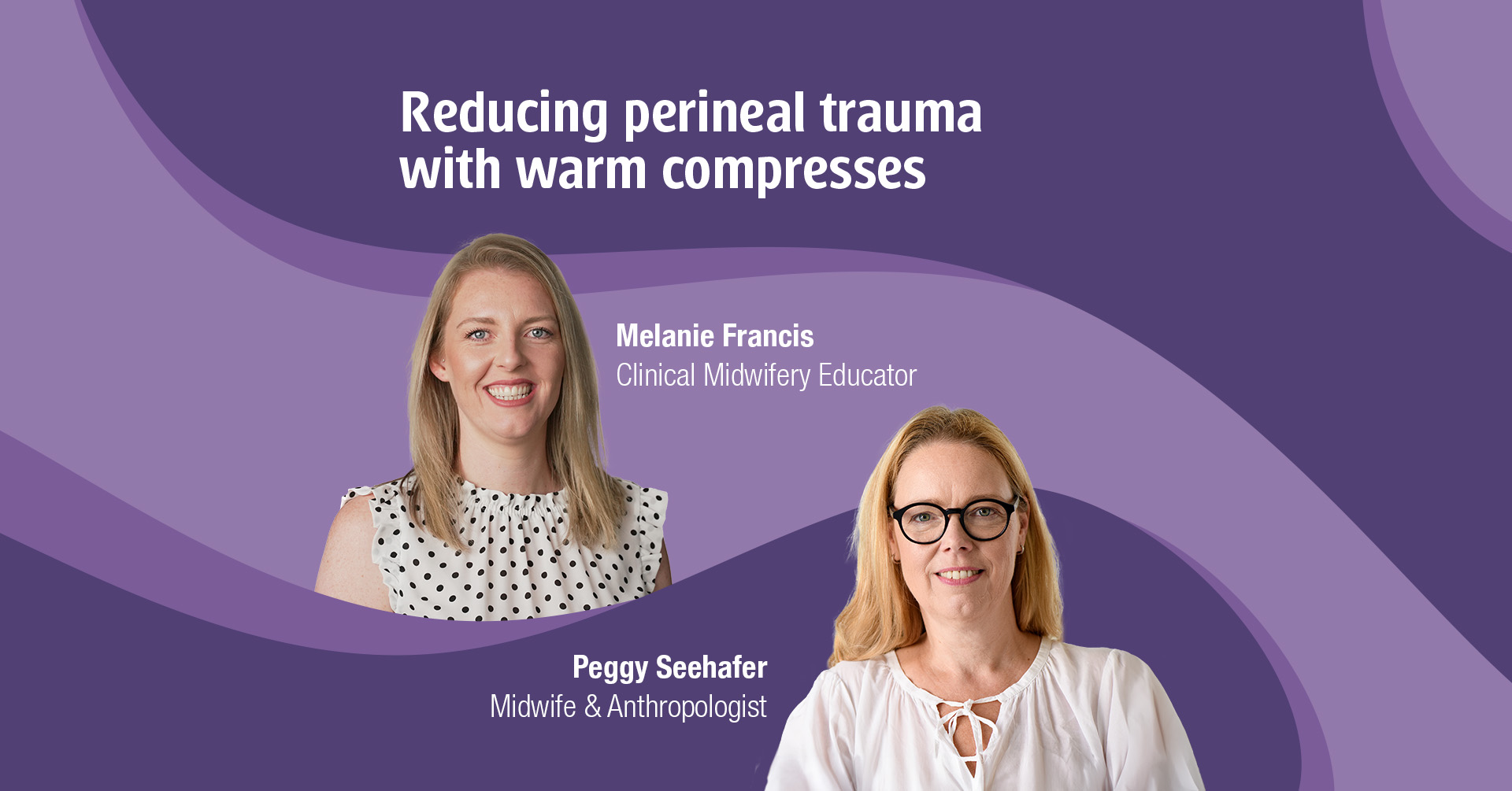
Reducing perineal trauma with warm compressesbirth

Speakers: Peggy Seehafer, Midwife, Anthropologist; and Melanie Francis, Clinical Midwifery Educator

Warm compresses are widely acknowledged to help reduce perineal trauma during vaginal birth. But what is the evidence, and how can we apply this knowledge in a clinical setting?

In this 1-hour webinar, Peggy and Melanie will present:

  • The current evidence and knowledge gaps
  • Clinical experience &
  • recommendations from the guidelines
    Tips for practical implementation

If you would like to be perfectly prepared for this webinar, you can go to our online course on diagnostics, including the 30-minute quiz with course certificate

Related courses on GynZone

Perineal protection
August 30th, 2024

Effects and risks of intrapartum perineal massage

In her presentation, Peggy presents the current evidence, clinical experience & recommendations from the guidelines; practical implementation and tips. Intrapartum perineal massage is the subject of controversial debate. Older studies see no advantage in its use with regard to birth injuries, reduction of pain, dyspareunia etc. compared to no treatment. A Cochrane Review confirms an advantage. More recent studies show more intact perineums and fewer sphincter injuries. But what practices are we talking about? And what about risks? Can manipulation lead to counterproductive restrictions in the woman’s movements and/or increased risk for defects in the rectovaginal fascia? The presentation and discussion is in English.

Related courses on GynZone

Perineal protection
February 14th, 2024

Shoulder dystocia: Risk factors and prevention

Shoulder dystocia is a rare, unpredictable, and almost unavoidable obstetric emergency. It is a sudden cessation of labor after the birth of the head, delaying the subsequent birth of the trunk. In her presentation, Peggy will present the current evidence and recommendations for best practices:
  • What factors have been recognized to influence the development of dystocia?
  • What factors have been proven to have no influence?
  • What should midwives and doctors pay attention to during care, in order to avoid shoulder dystocia as far as possible?