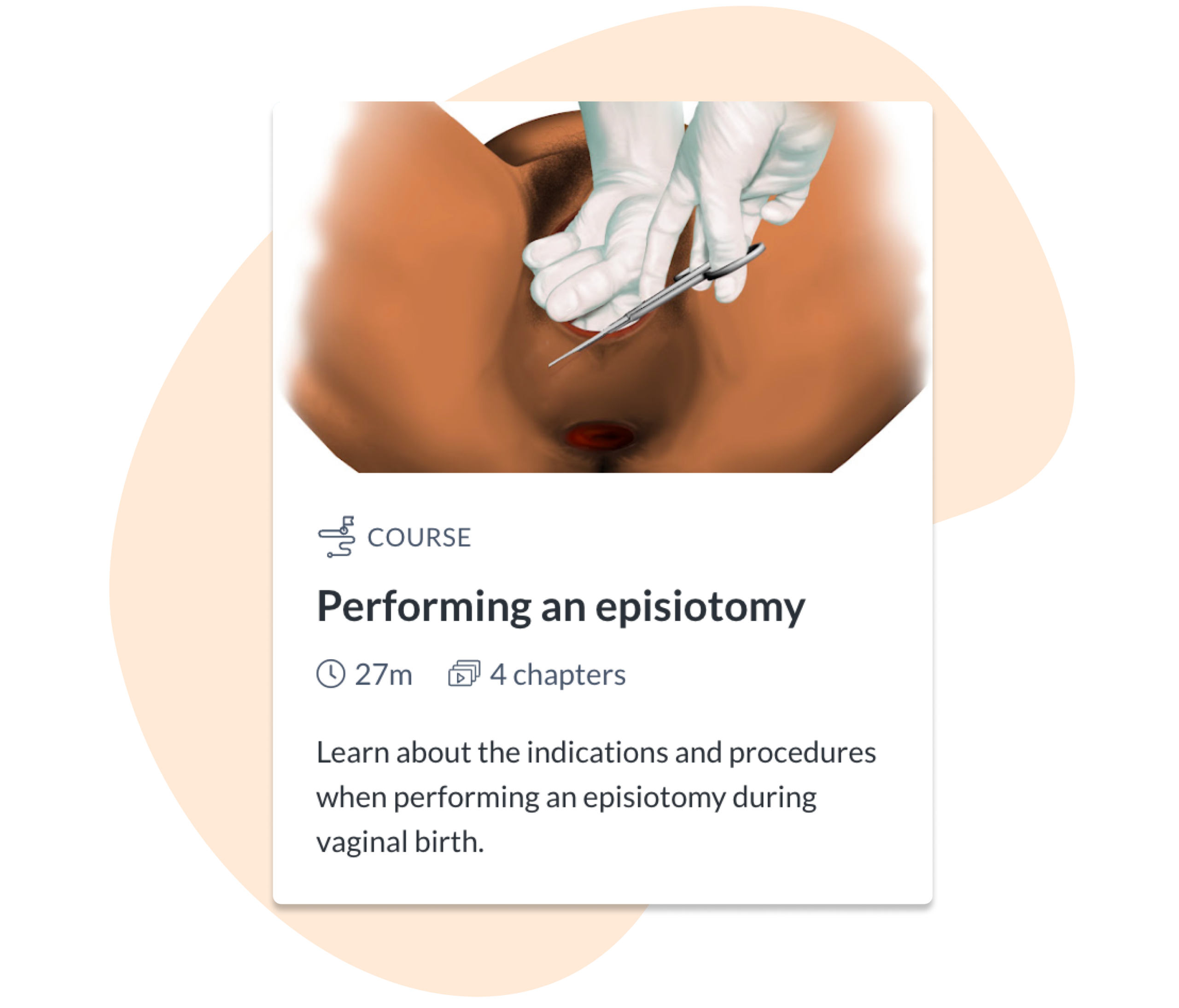
Online course on performing an episiotomy
Do you know when to cut — and when not to?
Get confident in the indications and the procedure – backed by the evidence, not by habit
Episiotomy is one of the oldest interventions in obstetrics, and one of the most argued-about. For much of the 20th century, it was performed routinely, in some hospitals in more than 9 out of 10 births. Today, the evidence tells a different story: routine use is not recommended, and every episiotomy should rest on a clear indication AND the woman’s informed consent.
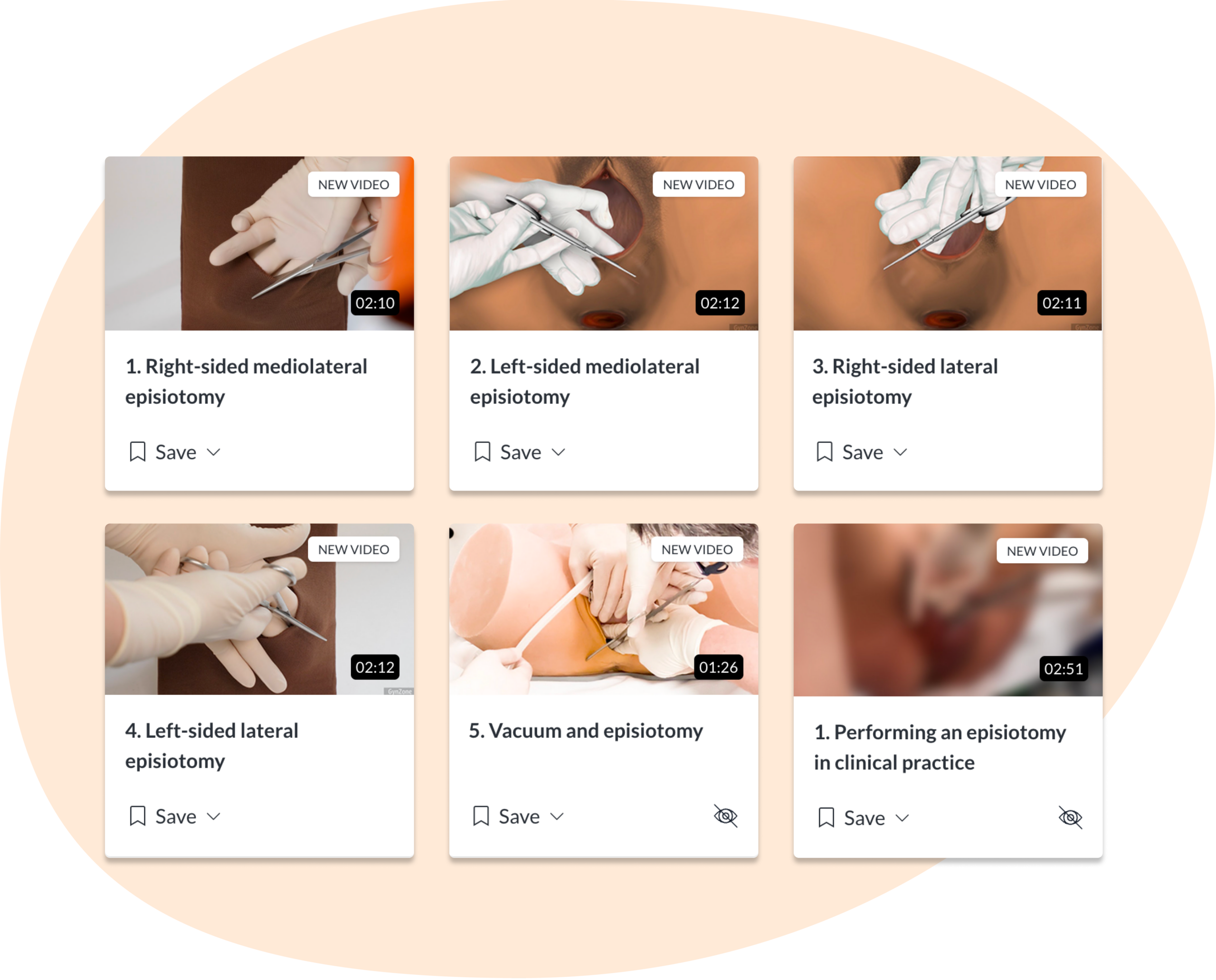
In this course, you’ll get the full picture – from indication to procedure. We present a wide range of clinical cases, and you’ll see the mediolateral techniques.
Features of the performing an episiotomy online course
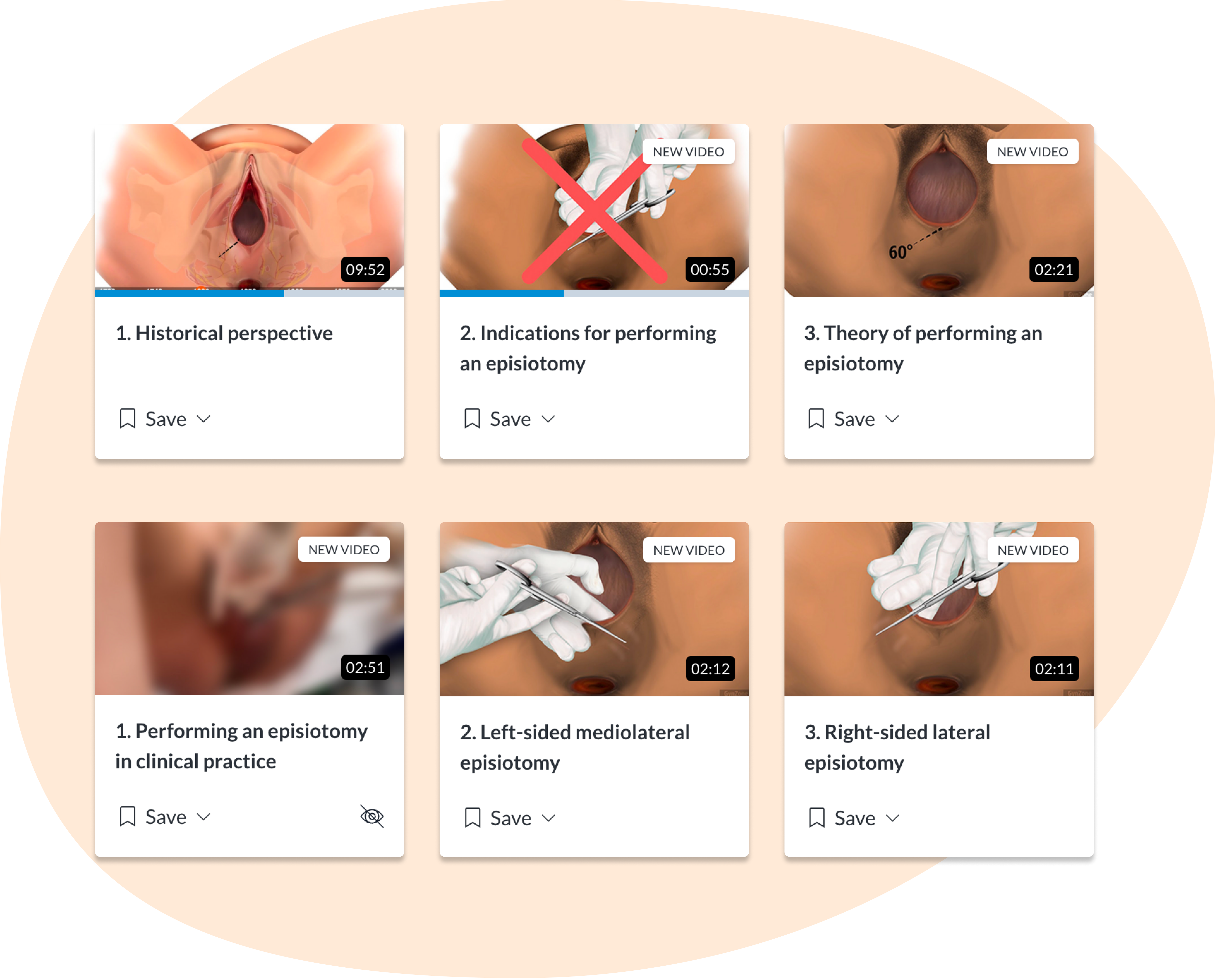
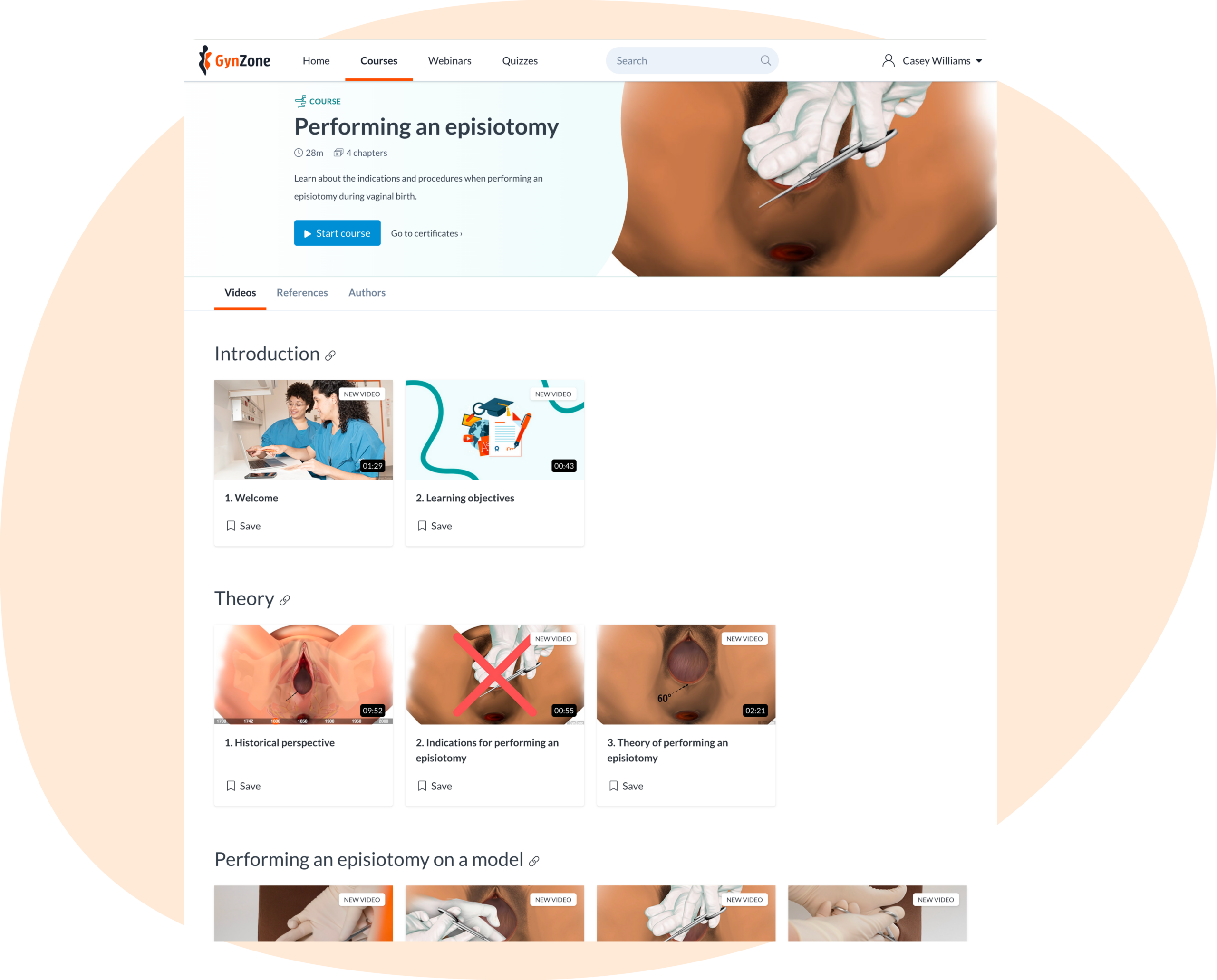
This course is designed for busy professionals and offer the following features:
- Video-based format: High-quality video lessons showcasing real-life procedures in clinical settings
- Self-paced learning to fit into your busy schedule
- Extensive clinical cases: Including indication, performing the procedure, the repair, and the follow-up
- Photographic documentation: View clear, step-by-step visual guides for each clinical scenario, helping you bridge the gap between theory and practice
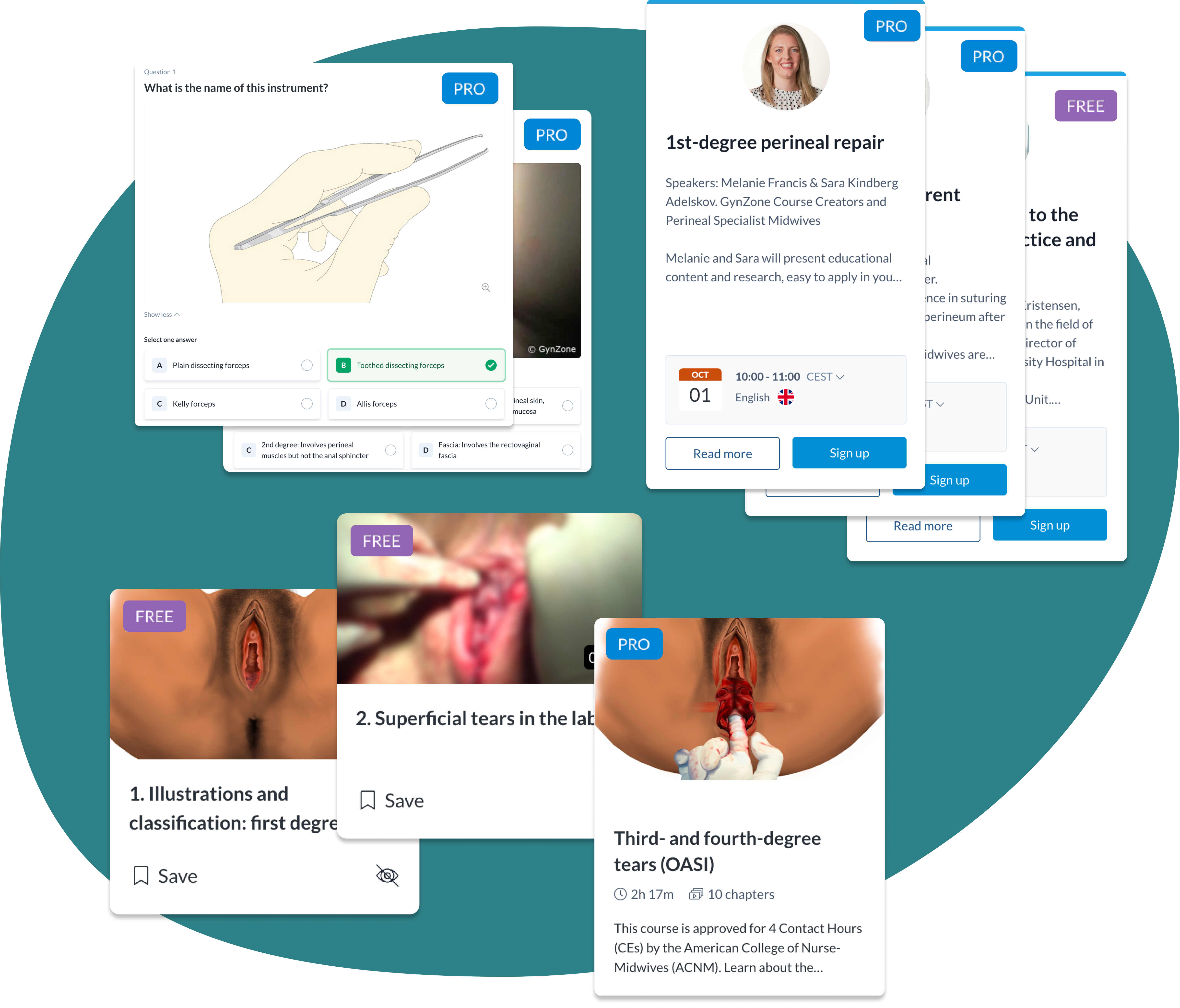
- Interactive learning: Test your knowledge with quizzes to solidify your understanding and earn a course certificate upon completion
- Expert insights: Learn from experienced clinicians with years of expertise in postpartum care and secondary repair procedures
Why this course matters
The episiotomy sits at an uncomfortable intersection: it’s a deliberate, iatrogenic wound, made with good intentions, on a woman who is in the middle of giving birth. For much of the 20th century, it was performed on the assumption that it prevented harm. We now know that assumption often didn’t hold – and that the women who received routine episiotomies in the 1980s and 90s are still living with the consequences.
That’s the weight behind every decision to cut. These courses exist so that when you do reach for the scissors, it’s because the evidence and the situation in front of you both say it’s the right call – and so the woman in front of you understands what’s happening and has genuinely consented to it.
What you will learn about performing an episiotomy
- Understand the evidence-based indications for episiotomy – and recognize when there isn’t one
- Master the mediolateral- and lateral techniques, from hand position to the 45–60° cutting angle
- Understand what the current evidence actually says about episiotomy and OASI, infection, blood loss, and long-term sexual function
You’ll find the articles that the course content is based on in the References section. If you want to learn how to repair an episiotomy, explore our online course, Episiotomy repair.
Clinical steps: How to perform an episiotomy step by step
Informed consent: Receive informed consent from the woman
Anesthetics: Provide local anaesthesia before you cut
Hands: Insert two gel-covered fingers behind the stretched perineum and rotate them out to a 45–60° angle from the midline for a mediolateral episiotomy. Use them to feel the thickness of the tissue and determine how far the cut should go
Scissors: Insert the scissors between the two fingers
When to cut: Wait for the next contraction. Ask the woman to breathe through it, so there’s less pressure on the fetus as you cut. The perineum is tight, not overstretched, with the head crowning and 4–6 cm visible. Cut at the peak of a contraction. If the episiotomy bleeds before the head is born, it was cut too early
Make the cut, then turn your hand to hold back the head while you set the scissors down
Delivery: As the head becomes fully visible at the introitus, move your dominant hand down onto the perineum to support the tissue
Repair: Once the episiotomy is performed, learn how to suture the tissue in our Episiotomy repair online course.
These steps are described in greater detail and illustrated through both animated videos and clinical cases. Go to our Performing an episiotomy course on our platform to learn how to perform an episiotomy.
Who is this episiotomy training course for?
This course is ideal for:
- Midwives and obstetricians who perform and repair episiotomies, or supervise those who do
- Midwives and obstetricians training in operative or instrument-assisted birth, where the indication for episiotomy comes up most often
- Clinical educators and preceptors who need a clear, evidence-based reference to teach from
- Students and newly qualified midwives and doctors who want to understand the indications and the technique before they’re the one holding the scissors

Start learning with GynZone today
Create a free account and get instant access to 15 videos.
Ready for more? Upgrade to GynZone Pro for:
- 1200+ videos, including animations, model demonstrations, and real clinical footage
- 36 courses
- 13 quizzes
- Join live webinars with leading clinical experts, or catch up anytime in our webinar library
- A certificate for every course, quiz, and webinar — ready to log as CPD points
Authors of the course

Eva Dimon
Midwife, Clinical specialist
Eva specialises in perineal repair and postnatal evaluation of healing.

Hanna Jangö
Consultant obstetrician, Phd
Hanna’s main research areas are within OASI and the mode of delivery in subsequent births.

Sara Kindberg
Midwife, PhD, Founder of GynZone
Clinical Perineal Care Specialist.
Sara wrote her PhD Thesis on suturing of second-degree perineal trauma in 2008.

Ranee Thakar
MD, FRCOG
World-renowned consultant obstetrician and urogynaecologist
Professor Thakar’s clinical expertise lies in managing pelvic floor disorders across a woman’s life course, including incontinence, prolapse, and childbirth trauma.

Peggy Seehafer
Perineal Care Specialist, Midwife, Magister art. Anthropology
Peggy works as midwife since 1986 and has over 40 years of clinical experience and practices in both Germany and Norway.